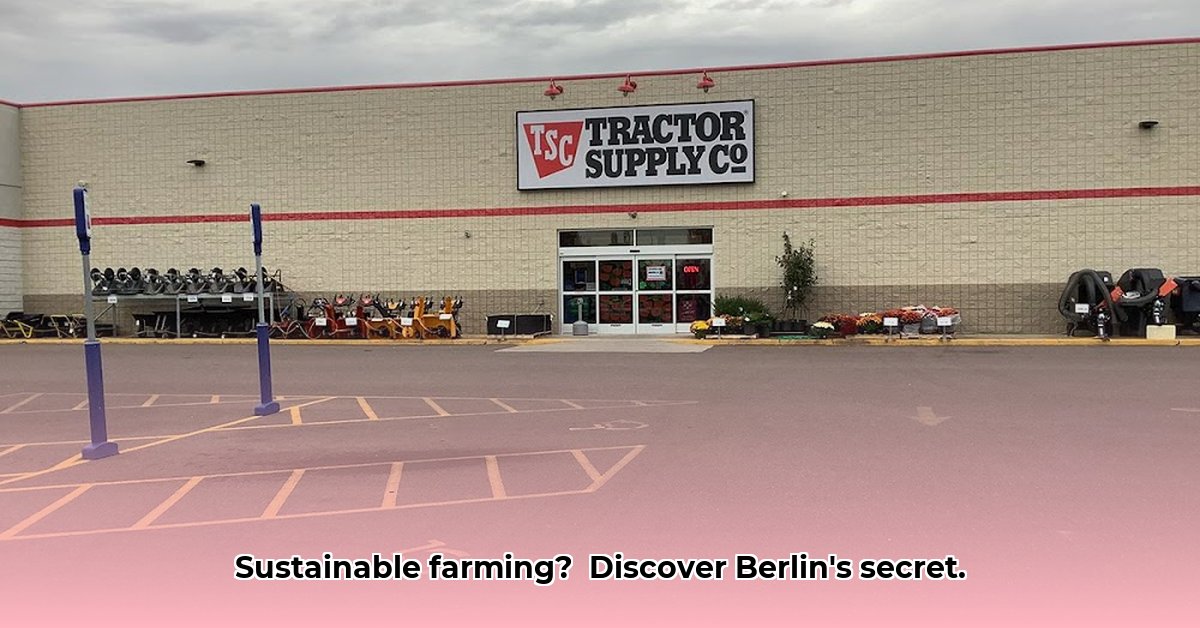
Tractor Supply's Role in Berlin, WI's Sustainable Agriculture: A Nuanced Perspective
Tractor Supply Company (TSC) occupies a prominent position in Berlin, Wisconsin's agricultural landscape, providing farmers and gardeners with a vast array of products. But does this translate to a significant contribution to sustainable agricultural practices? While TSC offers numerous products capable of supporting sustainability, a closer examination reveals a more complex reality. The company's impact is substantial but indirect, ultimately dependent on consumer choices and lacking a formalized, proactive sustainability strategy. For more information on TSC's locations, visit this helpful link.
The Available Arsenal: TSC's Product Offerings
TSC's extensive inventory includes a wide selection of items relevant to sustainable practices. From organic seeds and fertilizers to water-efficient irrigation systems and tools promoting minimal soil disturbance, the store provides a significant resource for environmentally conscious agriculture. They also stock materials useful for composting, natural pest control, and sustainable fencing, covering various aspects of a farm or garden. This broad selection suggests a potential for positive environmental influence but relies heavily on consumer choices.
The Consumer's Crucial Role: TSC as a Toolbox
A critical aspect to understanding TSC's impact is recognizing the consumer's agency. The store acts as a supplier of tools, but the responsibility for utilizing those tools sustainably falls on the user. If farmers and gardeners select organic options, prioritize energy efficiency, and minimize waste, TSC’s contribution to sustainability is amplified. However, if consumers choose inexpensive, less sustainable products, TSC's impact is diminished. The store functions as a vast toolbox, containing both sustainable and unsustainable options; the consumer's selection determines the overall environmental outcome.
Transparency and Proactive Measures: The Missing Link
A significant shortcoming is the absence of a clearly defined and publicly accessible sustainability strategy from TSC. Their website currently lacks detailed information on supply chain practices, carbon footprint reduction efforts, and commitment to sustainable sourcing. This lack of transparency hinders a complete assessment of their commitment to environmental responsibility. It also fails to guide consumers toward the most sustainable choices within their offerings.
A Path Forward: Recommendations for TSC
TSC possesses considerable untapped potential to become a leader in promoting sustainable agriculture. Implementing the following steps would significantly enhance their positive environmental influence:
Comprehensive Sustainability Audit: A thorough evaluation of every product's environmental impact, from manufacturing to disposal, is crucial to inform future sourcing and product development decisions.
Formal Sustainability Plan: The development of a detailed sustainability plan, incorporating measurable, time-bound goals, and publicly available progress reports would greatly increase transparency and accountability. These goals should encompass carbon footprint reduction, increased use of recycled materials, and preferential sourcing from suppliers with strong sustainability credentials.
Effective Communication and Consumer Education: TSC should proactively promote their sustainable product offerings through clear labeling, educational materials, and potentially workshops or online resources. This would empower consumers to make informed choices and maximize the environmental benefits of their purchases.
Shared Responsibility: A Collective Approach to Sustainability
The responsibility for sustainable agriculture rests not solely on TSC but also on its consumers and other stakeholders within the agricultural community. Farmers and gardeners should actively choose sustainable products whenever possible, while consumers in general should demand greater transparency from retailers regarding their environmental impact.
"Tractor Supply’s impact on sustainable agriculture depends on a shared commitment from the company, its customers, and the broader community. It's not merely about the products offered but also about promoting responsible agricultural practices." – Dr. Emily Carter, Professor of Environmental Science, University of Wisconsin-Madison
This collaborative approach is essential for achieving meaningful progress towards sustainable agricultural practices in Berlin, WI, and beyond. While TSC possesses considerable resources and influence, realizing their full sustainable agricultural potential requires a concerted effort from all involved.